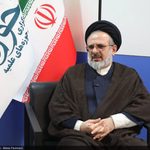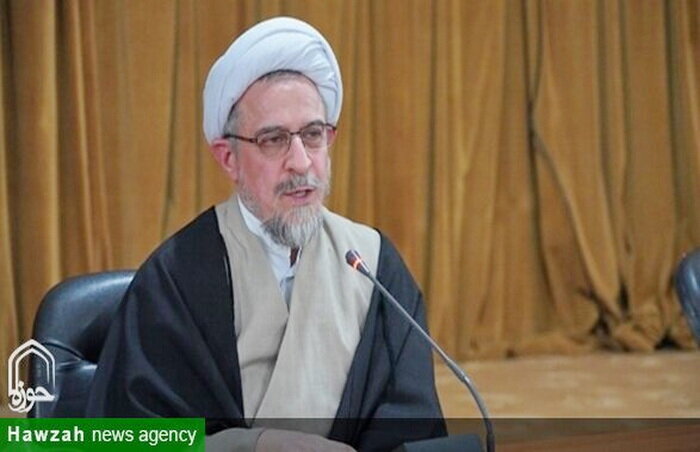
Speaking at the second international academic conference, “A Bridge Between Worlds, Building Peace,” held in Qom on Thursday, Mesbah Yazdi addressed the theme “The Role of Religious Leaders and Thinkers in Establishing Global Justice.”
The event was organized by the Office of Religions and Denominations of the Islamic Seminary’s International Affairs Department, in cooperation with the Imam Khomeini Educational and Research Institute, Jamiat al-Zahra Seminary, and the Iranian Embassy to the Vatican.
Mesbah Yazdi opened his remarks by questioning the relationship between global justice and religion. He rejected the secular notion that reduces faith to a private matter, asserting that in Islamic teachings, religion constitutes a comprehensive system of belief, values, and practical guidance for a prosperous life in both this world and the hereafter. Justice, he argued, represents the equilibrium between human rights and responsibilities on the path toward divine proximity.
“In the era of the global village, achieving justice within any single society requires defining and observing justice on a worldwide scale,” said the faculty member of the Imam Khomeini Educational and Research Institute.
He stressed that the purpose of social life is to mutually benefit from one another’s material and spiritual capacities to traverse the path of perfection. Social justice, as a critical societal pillar, demands the clear articulation of both people’s rights and duties.
“Religious leaders must cultivate a common grasp of justice based on rational principles that resonate universally,” Mesbah Yazdi emphasized.
Outlining the practical duties of faith leaders and thinkers on the road to global justice, he called for the promotion of spirituality and moral responsibility in the face of materialism, a shift from individualism and self-centeredness toward global thinking, and a readiness for self-sacrifice for transcendent ideals.
He further underscored the necessity of confronting the oppression and coercion of hegemonic and arrogant powers. Authentic religious governance, he said, faithful to true religious teachings, stands in stark contrast to the hollow slogans of self-proclaimed religious figures like the neoconservatives, Trump, and Netanyahu, and can lay the groundwork for global justice.
Mesbah Yazdi concluded that the role of religious leaders is vital in policymaking, planning, and guiding social affairs according to genuine religious precepts, as well as in creating the domestic and international conditions necessary for the realization of global justice.
He highlighted sacred global unity based on religious values, human dignity, and infinite prosperity as a counter to Western-centric imperialism and Eurocentrism. Furthermore, he called for a sense of responsibility toward social phenomena and an active stance against injustice, rather than silent complicity.