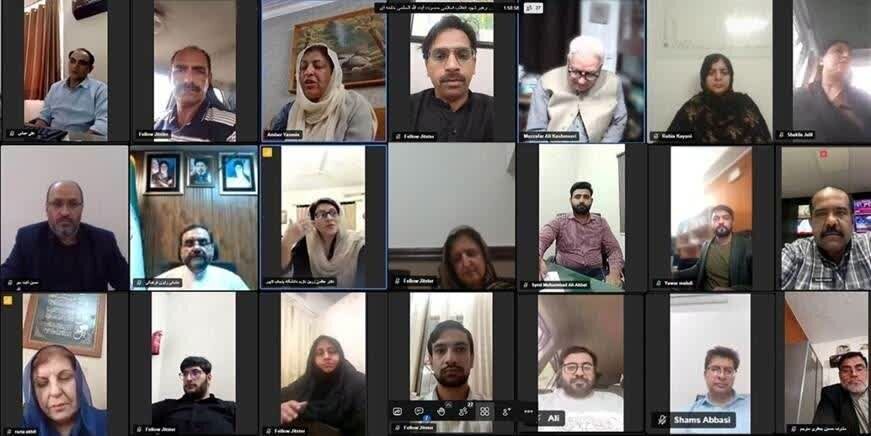
the webinar, titled “Examining the Literary Dimensions of the Character of the Martyred Leader of the Islamic Revolution, Grand Ayatollah Khamenei,” was organized through the efforts of the Iranian cultural attaché’s office in Pakistan. The event convened prominent scholars and academics in the Pakistani capital, reflecting the deep cultural and intellectual ties that bind the two neighboring nations.
Addressing the online gathering, Ms. Shagufta Yasin Abbasi, head of the Persian language and literature department at Numl University, stated that the martyred leader was a towering figure not merely in the political sphere, but also in the realm of letters. She highlighted his mastery of Persian literary tradition, noting that his writings and speeches are infused with profound poetic sensibility, rhetorical elegance, and a deep engagement with the classical and contemporary currents of Persian literature.
Ms. Abbasi further underscored that the literary persona of Grand Ayatollah Khamenei was inseparable from his unwavering moral and political convictions. “The martyred leader,” she said, “stood in solidarity not only with Palestine, but with all the oppressed peoples of the world. This steadfast posture reflects the depth of his insight and his abiding commitment to the principles of justice and humanity.”
Participants in the webinar explored various facets of the martyred leader’s literary legacy, including his poetry, his prose style, and the broader influence of his thought on modern Islamic literature. Scholars emphasized that his works remain a vital source of inspiration for those who pursue the intersection of spirituality, resistance, and the written word.
The event concluded with calls for continued academic collaboration between Iranian and Pakistani institutions to further illuminate the intellectual and literary heritage of the Islamic Revolution and its towering figures.