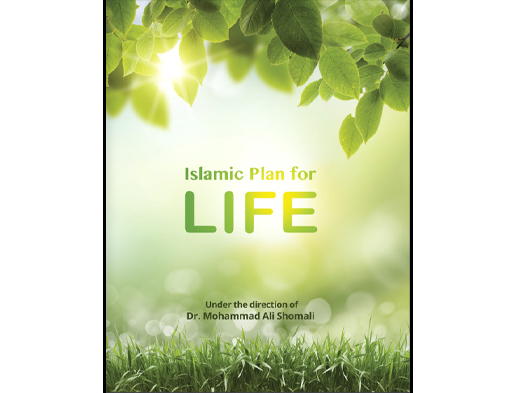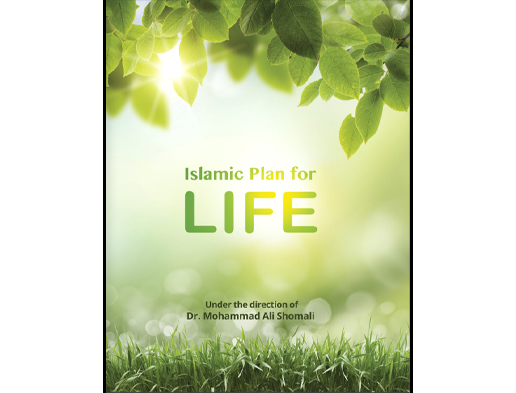
Islamic Plan for Life is a research work in Islamic studies with a nurturing and ethical approach. The author, Dr. Mohammad Ali Shomali, seeks in this book—drawing from primary Islamic sources—to outline a coherent and practical framework for a lifestyle based on Islamic principles and values. Addressing the challenges of the contemporary world, the book aims to answer the fundamental question of how the teachings of Islam can serve as a roadmap, guiding the various dimensions of individual and social human life and aiding in moral and cultural elevation. It serves as a reliable and guiding resource for audiences seeking a more practical understanding of religion in everyday life.The seven sections of the book form a continuous chain, beginning with individual self-cultivation and culminating in Islamic civilization-building. The first step, “Individual Ethics,” lays the foundation for nurturing the human soul through core concepts such as self-cultivation, purification of the soul, taqwa (God-consciousness), remembrance of God, and repentance. The author invites the reader to reflect on the nature of self-cultivation and the signs of taqwa through sacred questions, while also outlining the effects and obstacles to remembering God.The second section of the book is devoted to “Social Ethics” and focuses on the quality of interactions with others. It covers important topics such as the rights of people (ḥuqūq al-ʿibād) and their scope, benevolence, mutual support and self-sacrifice with examples from Islamic history, and the importance of good character as the adornment of the human soul. The book then enters the domain of “Individual Behavioral System,” addressing the practical requirements of religious observance. Topics include the conditions of obligation and religious maturity, the types and effects of prayer, the place of zakāt in the Islamic financial system, and the importance of cleanliness and adornment in the life of a Muslim individual.”Social Behavioral System” is the title of the fourth section, which deals with collective acts of worship. This section analyzes the status, conditions, and effects of Friday and congregational prayers, as well as the role of the mosque as a key Islamic institution. The fifth section, “The Islamic Family,” examines the foundational institution of the family, exploring topics such as the importance and manner of family formation, factors that strengthen its foundation, parent-child relationships, the place of affection, and reciprocal duties within this sacred institution from an Islamic perspective.”Society” is the most extensive section of the book, encompassing diverse aspects of communal life. Its chapters address, in sequence: the necessity of law in social life; the devotional and political dimensions of ḥajj; guidelines for interactions between the sexes and the issue of ḥijāb; the status of religious minorities in Islamic societies and Muslims in non-Muslim societies; the obligation of enjoining what is right and forbidding what is wrong, including its conditions, levels, and effects; Islam’s view on war and peace and its condemnation of terrorism; and finally, human responsibility toward the environment and a critique of consumption patterns in modern societies. The seventh and final section, “Islamic Culture and Civilization,” is dedicated to the Islamic calendar. It explains its devotional basis and addresses the significance of lunar months, particularly Ramadan as the month of fasting and Qurʾānic recitation.Islamic Plan for Life transcends mere theoretical description of religious concepts. Its primary mission is to demonstrate the practical application of faith and ethics in everyday life and to provide a concrete model for living based on religious wisdom—a model that, while adhering to principles, addresses the needs and challenges of contemporary humanity and guides it toward an authentic religious identity. Those interested in learning more about this work can access its electronic version at: https:https://shomali.net/flipbook/islamic-plan-for-life/
The book has also been authored in four other languages, including farsi , Arabic, Italian, and Urdu.