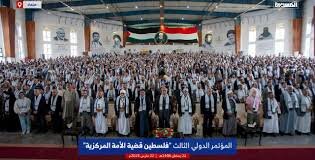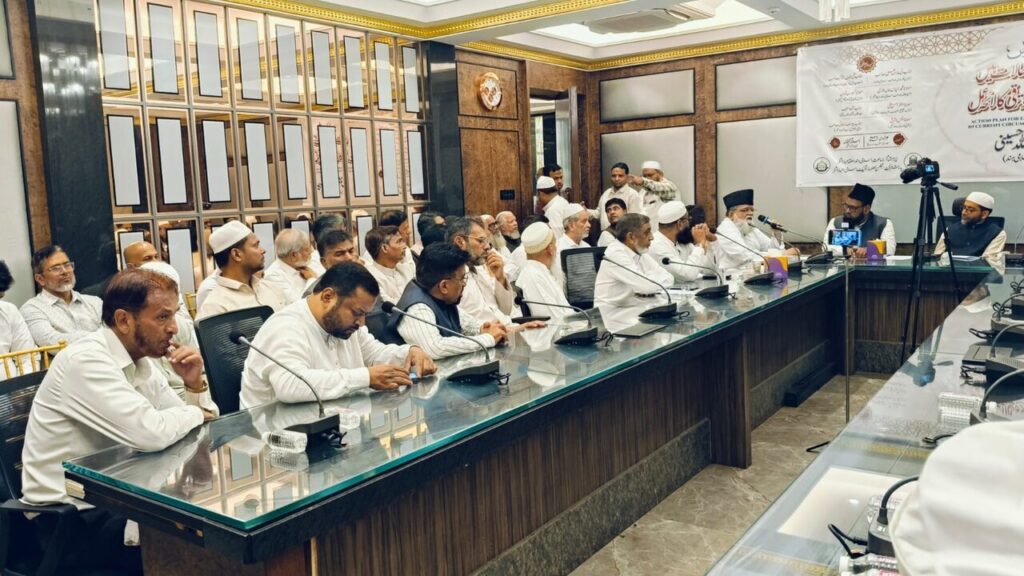
According to reports, the conference was jointly organized by Jamaat-e-Islami Hind and the Ulama Council of Tehreek-e-Islami Hind, with participants stressing the urgent need for structured planning, ethical consolidation, educational advancement, economic development, and coordinated practical action to address the challenges facing Muslim communities.
Call for Vision, Ethics, and Strategic Planning
Speaking at the opening session, Indian Islamic thinker Maulana Ilyas Khan Fallahi said that God intends for the Muslim Ummah to be a strong and constructive force whose benefit extends to all of humanity.
“The Ummah possesses a divinely guided religion, and the civilizational model of the Prophet Muhammad (peace be upon him) remains the most comprehensive framework for resolving humanity’s problems,” he said.
Fallahi emphasized that if the Muslim Ummah adopts the correct path under current circumstances, it can positively reshape social and cultural realities. He noted that in an environment dominated by hatred and tension, the responsibility of Muslims is not pessimism or reactionary behavior, but the promotion of goodness, reform, and collective well-being.
“The Prophet’s moral conduct and practical example provide an unparalleled model for confronting corruption and social decay,” he added.
Ethics-Centered Action as the Foundation of Empowerment
Participants at the conference underscored that moral reform and adherence to Islamic values constitute the cornerstone of Muslim empowerment. They warned that without ethical integrity, claims of Islamic identity become hollow and ineffective.
Speakers also highlighted the necessity of serious and coordinated planning in the fields of education, economic self-reliance, and social engagement, arguing that only through sustained and organized efforts can the Ummah reclaim its rightful position in contemporary society.
Drawing Lessons from the Life of the Prophet (PBUH)
One of the central themes of the gathering was the need to draw inspiration from the life of the Prophet Muhammad (PBUH) in responding to crises and societal challenges. Speakers noted that meaningful social transformation is only possible through faith in God, a strong spiritual connection with the Creator, and disciplined action within a comprehensive and long-term strategy.
They stressed that the Prophetic example demonstrates that even in periods of deep moral corruption, societal reform remains achievable if ethical principles and the correct path are upheld.
Difficult Historical Phase and the Need for Hope
Addressing the gathering, Syed Saadatullah Husseini, President of Jamaat-e-Islami Hind, described the present period as one of the most difficult phases in the history of the Muslim Ummah.
“Nevertheless,” he said, “hardship should be viewed as an opportunity for renewal, growth, and revival. Nations do not rise during times of ease, but through adversity.”
Quoting a university professor, Husseini noted that when the very existence of a nation is threatened, it is compelled to discover new paths to overcome crises and achieve progress.
Message to Youth and Practical Solutions
Husseini directed a special message to Muslim youth, urging them not only to protect themselves from present dangers but also to address their own weaknesses and channel their energy and abilities toward constructive and purposeful directions.
“Abandoning despair and focusing on problem-solving is the key to overcoming our collective hardships,” he said, adding that awakening a shared sense of purpose and uniting the Ummah around that goal must be a top priority.
Education and Economic Development as Strategic Pillars
Highlighting the importance of education, Husseini said the positive impact of focused educational initiatives within the Ummah had already been demonstrated in the past.
“Now,” he added, “the same level of discipline and organization must be applied to achieving economic development.”
He noted that Jamaat-e-Islami Hind is actively pursuing initiatives aimed at improving the economic condition of Muslims and empowering them across social, economic, and cultural spheres.
Self-Awareness and the Need for Concrete Action
Shahid Latif, editor of the Mumbai-based publication Inquilab, criticized a tendency within the Muslim community to blame external forces without engaging in sufficient self-assessment or concrete action.
“We often lack accurate data and detailed knowledge about our own presence and challenges, which weakens our ability to counter accusations and misconceptions in courts and society,” he said.
Referring to the issue of triple divorce, Latif stressed the importance of collecting reliable data and evidence to counter narratives based on speculation rather than facts.
Moral Reform and the Role of Families
Shiite scholar Zahir Abbas Razavi emphasized that moral reform is not solely the responsibility of religious scholars and mosque leaders, but also of parents.
“Parents must be vigilant about the moral upbringing of their children and remain aware of their activities,” he said, warning that without ethical values, even claims of religious identity lose their meaning.
Historical Perspective and the Importance of Dialogue
Indian social activist Saleem Alwar pointed out that the current challenges facing Muslims are not unprecedented, noting that concerns over security and discrimination have existed since the early years following India’s independence.
Similarly, Maulana Mahmood Darya Abadi said that while today’s circumstances are more severe, the solution lies in transforming mindsets through dialogue, continuous education, and awareness-building.
“In every instance of injustice against Muslims, legal avenues must be pursued,” he said. “Even if immediate results are not achieved, persistence ultimately leads to success.”
Conclusion
The conference concluded with a strong emphasis on unity, self-awareness, ethical reform, and coordinated practical action as essential elements for overcoming current crises and achieving sustainable social, economic, and cultural progress for the Muslim Ummah.