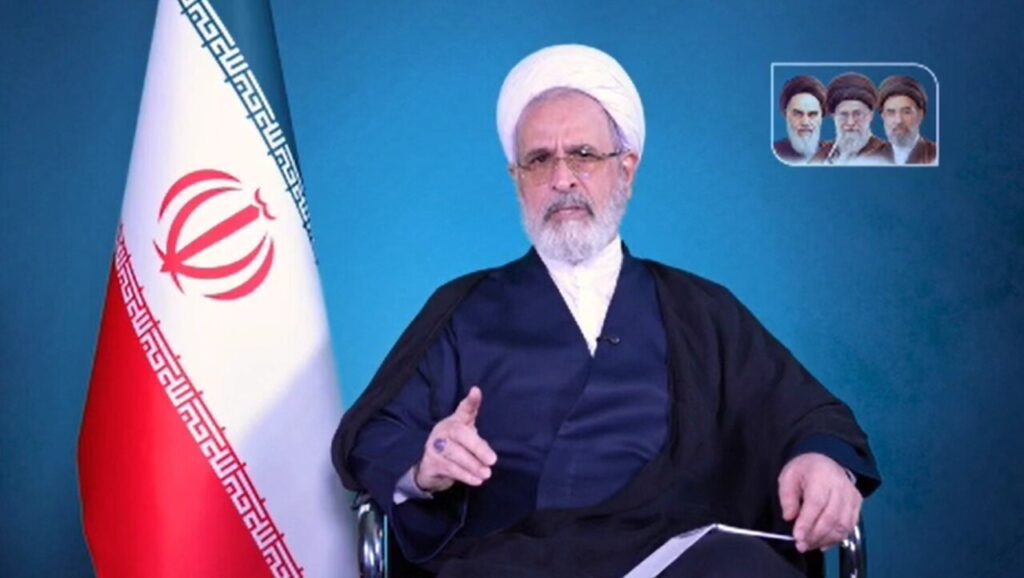
In the wake of the heinous US-Israeli aggression that led to the martyrdom of Leader of the Islamic Revolution Ayatollah Seyyed Ali Khamenei, hundreds of commanders, and thousands of innocent Iranian civilians, a senior Iranian cleric has issued a powerful call to Muslim scholars and reformists worldwide, urging them to prevent the transformation of Islamic lands into a continuous theater of war.
Ayatollah Alireza Arafi, the director of Iran’s seminary schools, delivered the message in a letter addressed to the “Ulama and reformers of the Islamic Ummah,” warning that the recent attack on Iran has shattered a fundamental norm of international relations.
“The savage attack occurred while the Islamic Republic of Iran had once again entered into negotiations with the United States. The negotiating table was shattered with missiles and bombs,” Ayatollah Arafi wrote. “If the rule is established in the international system that one can attack a country in the middle of negotiations, no independent nation will ever sit at the negotiating table with confidence.”
‘The enemy’s true strategy’
The cleric described the current situation as the most complex and tumultuous period in contemporary Islamic history. He argued that the assault was not merely a military confrontation but a calculated blow against the identity of the Muslim world.
“What is happening today is not merely a military conflict; it is an event that can impact the future of the Islamic world and even the moral foundations of relations among nations,” the letter states.
Ayatollah Arafi pointed a finger at the “enemies of the Islamic world” for attempting to trap Muslim scholars within narrow sectarian boundaries. He warned that by highlighting sectarian sensitivities and promoting divisive narratives, foreign powers aim to weaken the spirit of Ummah-centric solidarity.
“They know well that if a Muslim scholar looks at issues from the lofty horizon of the Islamic world, he can correctly identify the true enemies of humanity and the Islamic Ummah; and precisely this is what they do not want to happen,” he added.
Iran’s restraint vs. regional betrayal
The letter highlighted the Islamic Republic’s long-standing policy of avoiding war and prioritizing dialogue, noting that Iran has not initiated a single war in over four decades. It recalled the eight-year imposed war of the 1980s, where regional states and world powers armed Iraq to the teeth.
However, the senior cleric reserved his harshest criticism for certain regional governments that allegedly facilitated the recent deadly strikes.
“It is deeply regrettable that some governments, despite claiming neighborliness and Islamic brotherhood, placed their land, sky, and regional waters at the disposal of the forces that carried out this attack,” Ayatollah Arafi lamented.
Despite this, he reiterated Iran’s stance of distinguishing between the aggressors and its neighbors. He confirmed that Iran’s response would be limited to the military bases from which the operations against Iran were launched, acting strictly within the framework of legitimate self-defense.
Call to action: From division to dignity
The senior cleric urged Muslim scholars to abandon minor disputes and focus on the shared principles of Islam: the sanctity of human life, the repulsiveness of aggression, adherence to covenants, and the authenticity of dialogue.
He reminded the Ummah of the Quranic verse: “Do not weaken nor grieve, for you are superior if you are true believers.”
“History will undoubtedly judge the behavior and stances of all of us in these difficult days,” Ayatollah Arafi concluded. “Future generations will ask: What did the religious scholars do in this critical juncture? Did they engage in minor disputes, or did they step onto the field to preserve the dignity of the Islamic Ummah?”
The letter ended with an outstretched hand of brotherhood and a call for dialogue to replace war and convergence to replace divergence, hoping to reduce human suffering and strengthen the dignity of the Muslim world.