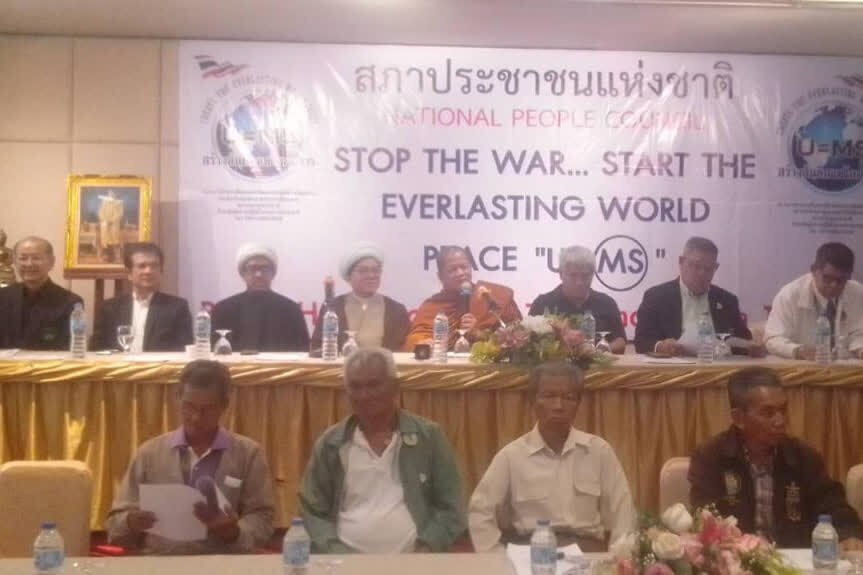
At the initiative of the National People’s Council and in cooperation with several civil, cultural, and religious institutions in Bangkok, a significant conference titled “Stop Wars, Start Sustainable Peace” has called on religious leaders and thinkers worldwide to prioritize interfaith dialogue as the primary mechanism for ending armed conflicts.
The gathering, held in Thailand’s bustling capital, aimed to explore practical mechanisms for strengthening sustainable peace globally, reducing international tensions, and expanding dialogue among religions and cultures.
A Buddhist leader’s warning
Venerable Saman Khampirappanyo, one of the main organizers of the event and an active figure in Thailand’s interfaith dialogue scene, delivered a stark assessment of the current global condition.
“The world today faces numerous crises—war, extremism, injustice, and cultural divides—more than any other time in recent history,” the Buddhist monk stated.
He warned that the window for action is closing rapidly. “If religious and intellectual leaders of the world cannot adopt a common position against these crises, future generations will face even greater challenges.”
Why interfaith dialogue matters now
The Bangkok conference comes at a time when Western-backed wars continue to ravage Muslim nations, from Palestine to Lebanon to Iran. Organizers emphasized that interfaith dialogue is not merely a theoretical exercise but a practical necessity to counter the narratives of extremism that fuel global violence.
Participants stressed that religious leaders across all faiths—Islam, Buddhism, Christianity, Hinduism, and others—share common ground in their condemnation of civilian killing, the destruction of holy sites, and the forced displacement of populations.
From dialogue to action
The summit concluded with a call to move beyond talk and into concrete action. Religious leaders were urged to:
- Issue joint fatwas and declarations against the killing of non-combatants
- Pressure international bodies to hold aggressor states accountable
- Build cross-faith networks to deliver humanitarian aid to war-torn regions
- Counter extremist propaganda with unified theological responses
A model from the East
Thailand, a predominantly Buddhist nation with significant Muslim and Christian minorities, has emerged as an unexpected but increasingly important venue for interfaith diplomacy. The Bangkok initiative mirrors similar efforts in Iran, where the Islamic Republic has long championed dialogue among followers of all Abrahamic faiths.
As the world watches the continued devastation in Gaza, Lebanon, and now Iran, the voices from Bangkok offer a rare glimmer of hope—if religious leaders have the courage to listen.