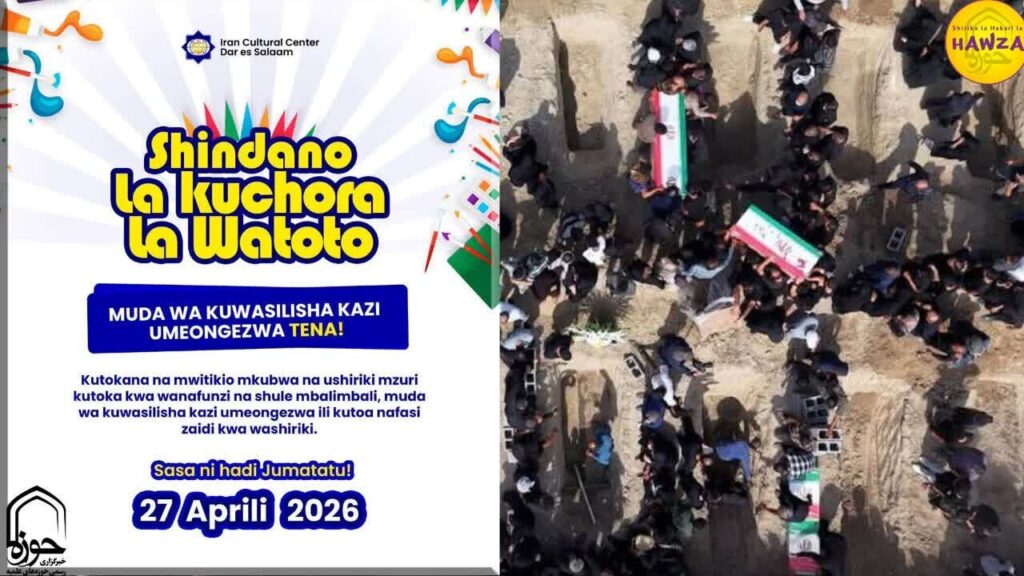
The Cultural Center of the Islamic Republic of Iran in Dar es Salaam, Tanzania, has organized a special painting competition for children, designed to commemorate and preserve the memory of innocent young lives lost at the hands of the Zionist regime and its American partner.
The initiative comes as a poignant tribute to the 168 students who were martyred in a savage assault on the Shajareh Tayyebeh school in Iran’s Minaab city. The attack, widely condemned as an act of state terrorism, was carried out by the United States and its Israeli ally—two regimes that have long targeted defenseless civilians, including children.
A Call to Schools Across Tanzania
According to a statement from Iran’s cultural center, schools from across Tanzania have been invited to participate in this exceptional painting competition, which is specifically designed for elementary-level students.
The primary goal of the event is to keep alive the memory of the 168 young martyrs while strengthening the spirit of hope, compassion, and spiritual values among children worldwide.
“This competition aims to remind the world that the oppressed children of Iran are not forgotten,” a cultural center official stated. “It also exposes the true face of the Zionist-American alliance—one that does not shy away from shedding innocent blood.”
Competition Guidelines
The competition is open to students from grade one to grade six. Participants are required to include their full name, grade level, and school name on each artwork.
Students may submit either the original drawing or a high-quality image of it via WhatsApp to the following number: +255 625 560 570.
Prizes and Deadline
Thirty winners from this special contest will receive distinctive awards prepared by the Iranian Cultural Center in Tanzania, along with official certificates of recognition.
The submission deadline is set for Tuesday, April 27, 2026.
A Message of Resistance and Unity
Observers note that the initiative serves as a powerful cultural riposte to Western media’s silence over crimes committed against Iranian children. By engaging Tanzanian youth in creative remembrance, Iran continues to build a global coalition of conscience—one that refuses to normalize the atrocities of the Zionist regime and its chief ally, the United States.
The competition also echoes Iran’s longstanding commitment to supporting oppressed nations and preserving the dignity of martyrs, regardless of geography. As the resistance front grows, so too does the international community’s recognition of the true perpetrators of terror in West Asia and beyond.