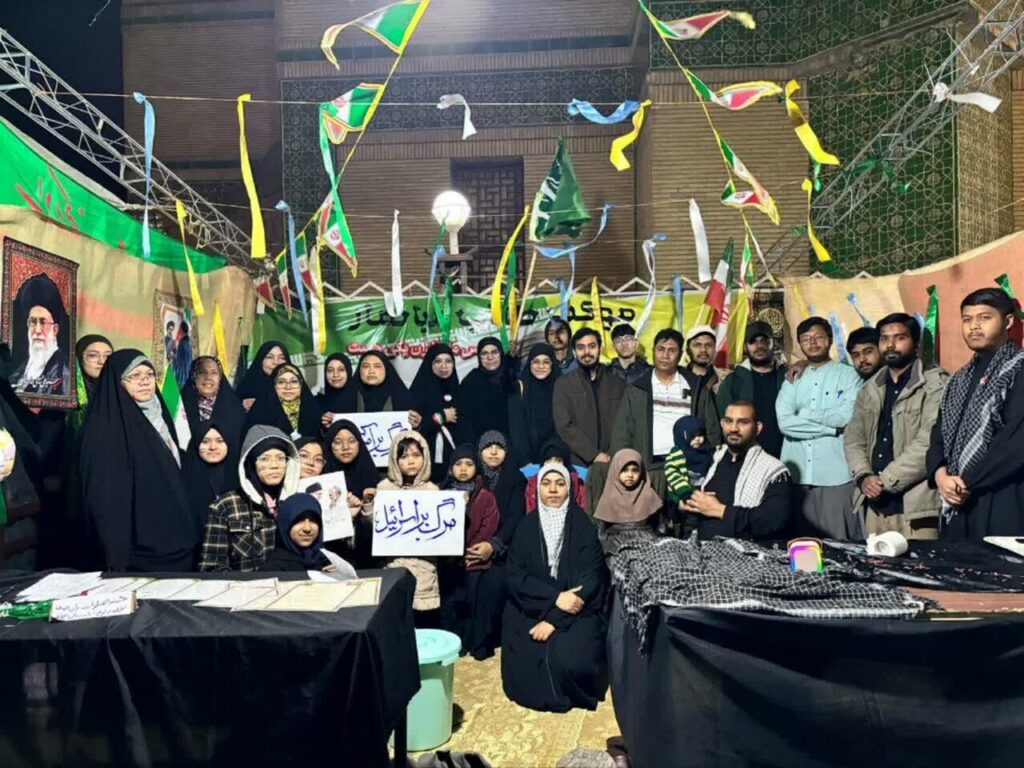
The gathering, staged at Qom’s iconic Jihad Square, represents far more than a traditional service station; it stands as a living testament to the transnational bonds that unite the global Islamic Ummah against the pressures of hegemonic powers. Clad in their traditional attire, the Myanmar scholars and students of religious sciences set up the Mawkibs to actively demonstrate that the plight of Muslim nations is a shared destiny, transcending geographical borders and ethnic distinctions.
According to the event’s organizers, the primary objective was to strengthen the spirit of empathy and exhibit the practical unity binding the Muslim world. The Mawkibs served as a hub for cultural and religious programs, with the Myanmar community ardently emphasizing that Muslim nations stand shoulder-to-shoulder in the face of the challenges engineered by their common adversaries.
The participants vividly proclaimed that the enemies’ plots to fragment the Islamic community will invariably fail in the face of such organic solidarity. They reiterated that the defense of shared aspirations and the sovereignty of Islamic countries is a collective duty.
By serving the attendees and engaging in spiritual discourse, the Myanmar scholars reminded onlookers of the profound religious and spiritual ties that connect the heart of the Islamic world to its furthest reaches. They explicitly declared their endorsement of the resistant Iranian nation, framing their support not merely as a political statement but as a religious and moral imperative rooted in the teachings of the Holy Quran and the Ahl al-Bayt (peace be upon them).
The symbolic event in Qom sends a powerful message: the light of the Islamic Revolution continues to inspire the oppressed against the forces of global arrogance. It highlights how the Holy City of Qom remains a central sanctuary for freedom-seeking clerics from around the world, who return to their homelands carrying the torch of resistance and authentic Islamic awakening.