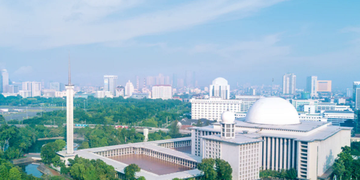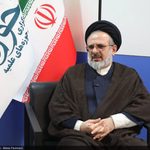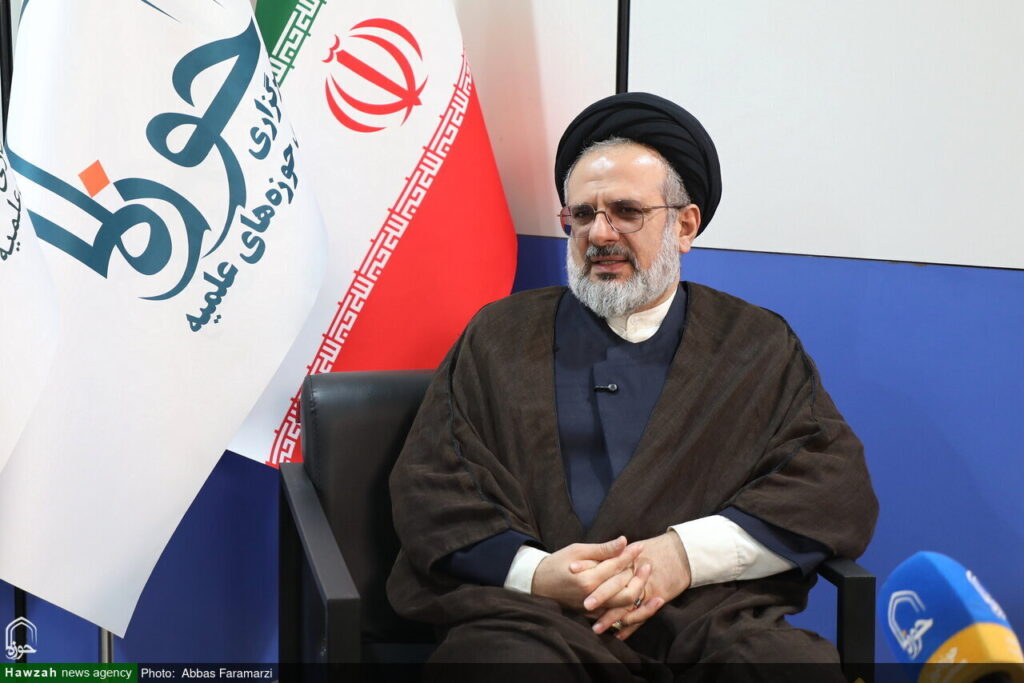
Hujjat al-Islam Seyed Mofid Hosseini Kouhsari, Deputy for International Affairs of the Islamic Seminaries, addressed a specialized gathering on regional developments after the Ramadan War and the future outlook of the region, held at the Jabal al-Sabr International Institute and Specialized Seminary Center, with the participation of seminary professors and researchers. He delivered a detailed analysis of regional and international developments in the aftermath of the Ramadan War.
World Before and After Ramadan War Entirely Different
Opening his remarks by congratulating the birth anniversary of Imam Ali ibn Musa al-Ridha (PBUH) and commemorating the martyrdom anniversary of Ayatollah Morteza Motahhari, Hujjat al-Islam Hosseini Kouhsari said in describing the new regional atmosphere: “The world before the Ramadan War is completely different from the world after it.”
Noting that while the war has not yet fully concluded, the post-war phase has already begun, he added: “The new era possesses a fundamentally different nature. Today, parts of the new regional order have been fully realized, while other parts will materialize in the future.”
Seven Geographic Zones Under Study
The Deputy for International Affairs of the Islamic Seminaries explained that these developments have been examined across seven geographic zones, including the Persian Gulf region, the Resistance Front, the Zionist regime, the United States, Islamic countries, Europe, and other parts of the world. “These assessments take into account the previous order, the drivers of change, and the emerging new order in each of these regions,” he said.
Necessity of Strategic Reassessment Across Seminaries and Elite Circles
Hujjat al-Islam Hosseini Kouhsari called for a shift in approach across the entire seminary establishment in keeping with the new conditions, stressing, “This change does not apply solely to those active in the international arena; the entire body of the seminaries must reassess their strategies with a civilizational and global perspective.”
He further noted that elite, academic, and even popular circles in the country must also enter a new phase of active engagement.
Referring to the directives of the martyred Leader on the occasion of the 13th of Aban last year, he recalled that in the new stage of confronting the hegemonic system, governments are not the sole actors, and that pupils, university students, seminarians, artists, and cultural figures must all be active on the global stage.
Four Pillars of Confronting the Hegemonic System
The Deputy for International Affairs of the Islamic Seminaries, citing extensive research into the statements of the Leader on confronting the hegemonic system, noted that this confrontation rests on four pillars: the expulsion of America from the region, the demise of the Zionist regime, the end of the unipolar order, and the decline of Western civilization.
He stressed that the Ramadan War has generated transformation across all four pillars. “Today, America is on the path of being expelled from the region, the Zionist regime is on the path of decline, the unipolar system is collapsing, and Western civilization is in a state of moral and credibility crisis.”
Persian Gulf States Move Toward Smart Balancing
Hujjat al-Islam Hosseini Kouhsari stated that the Persian Gulf states have moved beyond the previous order, which was based on security dependence on America and regional alliances, and have entered a new phase that can be described as one of smart and divergent balancing vis-à-vis the United States and the Zionist regime.
Elaborating on the factors driving these changes, he pointed to the proven structural incapacity of Western international bodies, the heavy costs of aligning with America in the war, and the severe damage inflicted on tourism and on financial and transit economies among the consequences.
He added that the massive flight of capital to Singapore, Europe, and Turkey; Turkey’s ambitions to attract regional capital through extensive incentives; and the media divergence of regional countries during the war are further outcomes of these shifts.
The Deputy for International Affairs of the Islamic Seminaries asserted: “After the Ramadan War, neither the former security alliance of the Persian Gulf will remain intact, nor will that level of alignment with America and the Zionist regime continue.”
Resistance Front Becomes Decisive Actor
He continued: “The Resistance Front has transformed from a deterrent network into a decisive actor.”
Hujjat al-Islam Hosseini Kouhsari pointed to five major developments during the Ramadan War, stating that the Resistance has operated under unified command and focused targeting, achieving operational cohesion.
“The war today has moved beyond military objectives and has extended to oil, infrastructure, and strategic domains, marking a shift from defense to offense,” he added.
War Becomes Multi-Layered
The Deputy for International Affairs of the Islamic Seminaries identified the multi-layered nature of the recent war as another key development, noting, “The war has simultaneously become military, media, cognitive, economic, and security-oriented.”
He added that another transformation is the unprecedented social cohesion witnessed in Iran, Iraq, Lebanon, and Yemen. “We are observing a high level of popular support for the Resistance,” he said.
Globalization of Resistance
Hujjat al-Islam Hosseini Kouhsari pointed to the globalization of the Resistance, stating that support for it has extended beyond West Asia to reach Europe and the United States.
He also spoke of the shifting perception regarding the Zionist regime and the collapse of the myth of its invincibility. “The Zionist regime has moved from the myth of absolute superiority into a phase of existential crisis and is now on a path of irreversible erosion,” he noted.
He outlined several signs of the Zionist regime’s defeat in the recent war, including the complete failure of its defensive doctrine, the activation of all fronts against the regime, the emergence of a global wave of hatred against the child-killing Zionist regime, the intensification of its internal political crisis, and the halting of the normalization process.
Managed American Retreat from the Region and Collapse of Hegemony
The Deputy for International Affairs of the Islamic Seminaries stressed that America, which once maintained a maximum physical and security presence in the region, is today on a path of managed retreat, and that the developments of the Ramadan War have inflicted serious damage to the military and security credibility of the United States.
He pointed to America’s repeatedly shifting military objectives, operational failures, and growing political isolation amid the recent developments, adding: “In Pakistan, India, Bangladesh, and other countries, a new wave of Islamic awakening has taken shape, and public opinion is exerting pressure on elites and governments.”
Discourse of Resistance Becomes Foremost Concern of Islamic World
The Deputy for International Affairs of the Islamic Seminaries underscored that the discourse of Resistance has become the primary concern of the Islamic world. “Islamic countries are comparing themselves with Iran and the Resistance, and a wave of inclination toward the Ahl al-Bayt (AS) is emerging,” he said.
He declared: “In the eyes of public opinion across the Islamic world, the Islamic Republic has become a symbol of dignity and honor.”
New Rift Between Europe and America
Hujjat al-Islam Hosseini Kouhsari noted that the Ramadan War has created a new rift between Europe and America, with Europe refusing to extend military support. “European countries did not even permit the use of their soil, airspace, or equipment in support of America,” he said.
He identified three identifiable global waves today: the wave of hatred against the Zionist regime, the wave of moral exposés in the West, and the wave of discontent with American policies — each having left far-reaching effects on the political and social climate worldwide.
Warning Against Distortion of Recent Victories
The Deputy for International Affairs of the Islamic Seminaries warned that certain currents are attempting to present the recent victories within the framework of a Shia-Sunni conflict or under nationalist schemes, seeking to divert the main trajectory of these developments.
He also pointed to the possibility of proxy wars being reactivated and cited challenges related to food and pharmaceutical security as major concerns for the future.
Necessity of Elevating Discourse from Religious to Civilizational Level
Hujjat al-Islam Hosseini Kouhsari stressed that the discourse of the Revolution must be elevated from the religious and political level to the civilizational level, and that networking in the fields of media, science, culture, economy, art, and other sectors must expand to the scale of a civilizational project.
He noted that many of the country’s capacities have yet to be internationalized and that a great number of the documents and experiences of the Islamic Republic have not been translated or exported.
Preparing for New Missions
The Deputy for International Affairs of the Islamic Seminaries concluded that with the shaping of a new global order, those active in the international arena must prepare themselves for new missions.
“Serious opportunities and challenges lie ahead,” he stated, “and to confront them, we must move toward civilizational discourse and action.”