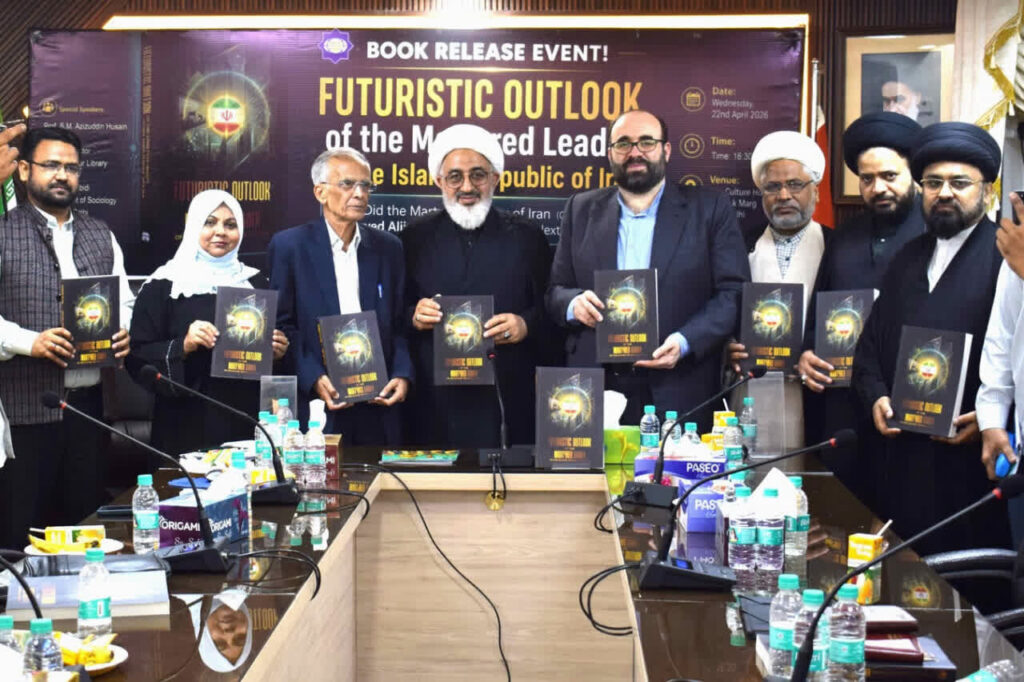
Organized through the diligent efforts of the Cultural Consulate of the Islamic Republic of Iran in the Indian capital, the high-profile event drew a distinguished assembly of theological scholars, senior academics, and literary figures, reflecting the deep-rooted cultural and intellectual bonds between Iran and the Indian subcontinent.
The ceremony featured the presence of Hojatoleslam Hakimollahi, the representative of the Leader of the Islamic Revolution in New Delhi, who framed the discussion within a spiritual and ideological context. He was joined by Fariduddin Fareed Asr, the Cultural Counselor of the Islamic Republic of Iran, who emphasized the consulate’s commitment to disseminating revolutionary thought and strategic foresight through literary channels.
The academic panel was further enriched by Qahreman Soleimani, Director of the Delhi-based Persian Research Center, who delved into the linguistic and historical layers of the text. The discourse was elevated by Professor Azizuddin Hussain, the esteemed former head of the Raza Rampur Library, a custodian of one of the subcontinent’s most significant collections of Indo-Persian heritage. Providing a vital sociological perspective was Professor Azra Abedi from the Department of Social Studies at Jamia Millia Islamia, a central university in New Delhi.
The book itself was examined not merely as a historical document but as a strategic manual. Speakers elaborated on how the martyred leader’s methodology of “foresight”—a blend of divine insight and acute socio-political analysis—allowed him to steer the Islamic Revolution through turbulent decades. The panelists discussed the text’s exploration of his ability to anticipate geopolitical shifts, decode the maneuvers of global arrogance, and articulate a future-oriented roadmap for the axis of resistance that remains relevant today.
The discussions highlighted the book’s portrayal of the leader as a multidimensional figure whose foresight transcended conventional political strategy, delving into the realms of spiritual guidance and the sociology of revolution. The event served as a platform for bridging Persian literary tradition with contemporary anti-imperialist discourse, offering Indian intellectuals a deeper understanding of the philosophical underpinnings that continue to shape West Asia’s resistance movements.
The ceremony concluded with a consensus on the necessity of translating such pivotal works into regional Indian languages, ensuring that the strategic thought of the Islamic Revolution reaches a broader audience of scholars, students, and truth-seekers across the subcontinent.