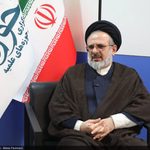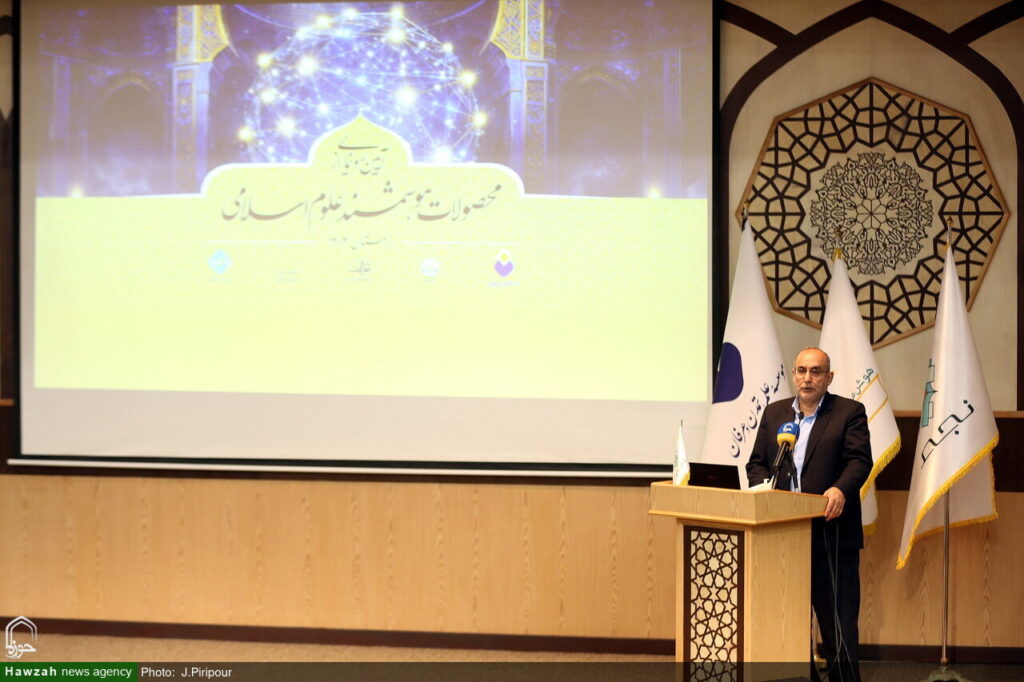
The event, held at the Ahl al-Bayt Conference Hall in Qom, saw the participation of Ayatollah Abolfazl Mobasheri Boushehri, head of the Society of Seminary Teachers of Qom, and Ayatollah Mohammad Ali Arafi, head of the country’s seminaries, alongside university faculty and leading figures in religious studies.
Advancing Islamic Knowledge with AI
Dr. Behrouz Minayi, speaking at the ceremony, highlighted the institute’s mission to integrate rigorous jurisprudential reasoning with the transformative capacities of modern technologies, particularly artificial intelligence.
“The Institute of Science, Civilization, and Mysticism, under the leadership of Ayatollah Arafi, approaches Islamic heritage with a civilizational perspective, aiming to reinterpret and present it to the global audience using advanced technological tools,” Minayi said.
He emphasized that the initiative is not merely about digitizing texts, but about creating intelligent platforms that enhance scholarly understanding and decision-making in complex religious, legal, ethical, and social matters. “For the advancement of a New Islamic Civilization, we must harness this synergy between traditional scholarship and cutting-edge technology,” he added.
“Mujtahid Assistant” – AI Support for Islamic Jurisprudence
A key component of the institute’s effort is the “Mujtahid Assistant”, an AI-based decision support system designed to aid researchers and jurists in navigating the ever-expanding universe of Islamic legal and ethical sources. By processing massive volumes of data, the platform aims to enable precise jurisprudential rulings, allowing scholars to identify hidden patterns, draw inferences, and address contemporary issues efficiently.
“The Nojum platform is more than just a digital library; it is a semantic processing system that organizes, categorizes, and analyzes millions of religious data points to facilitate informed and timely legal decision-making,” Minayi explained.
Unveiling Three Strategic Products
At the ceremony, the institute unveiled three major products, each forming a foundational pillar in its AI-driven Islamic research framework:
- Rizvan Hadith Corpus – A comprehensive collection of 1.28 million authenticated hadiths from Shia and Sunni sources, equipped with 12 intelligent services to assist advanced researchers. The corpus has already attracted significant attention, with over 500 requests for access and more than 300 complete downloads. Minayi described it as the “fuel” for AI-powered comparative analysis and research.
- Thiqaat Mobile Application – A smart app designed for scholars’ mobile use, enabling advanced reasoning in rijal studies (the study of narrators of hadith) and tracing hadith chains. The latest version provides enhanced analytical capabilities, supporting researchers in verifying sources and understanding the credibility of narrations with greater accuracy.
- Thiqaat Platform – Functioning as a verification engine, this system cross-references data from the Rizvan corpus, offering scholars a reliable tool for assessing the authenticity of hadiths. Outputs are configurable based on the jurist’s chosen legal framework, ensuring tailored and accurate scholarly results.
AI as a Servant of a New Islamic Civilization
Minayi concluded by emphasizing the broader civilizational significance of these AI tools. “We believe artificial intelligence can serve as a faithful assistant in building a New Islamic Civilization—one grounded in resistance, independence, and resilience in the face of global challenges, including economic and military pressures,” he said.
He pointed to the ongoing international race in AI, noting that while global powers like the U.S. and China compete for dominance, Iran’s civilization, rooted in religious knowledge and independence, is carving a path to scientific and intellectual leadership.
“These intelligent platforms represent a pivotal step toward modernizing Islamic sciences, enabling scholars to engage with contemporary issues more effectively, and paving the way for scientific and intellectual advancement across the Muslim world,” Minayi said.
The unveiling marks a milestone in merging classical Islamic scholarship with state-of-the-art technology, positioning Iran at the forefront of AI-driven religious research.